






How to Manage a Fire Evacuation | Free Poster Included
According to IOSH, there are around 22,000 fires in UK workplaces each year. These fires can have devastating consequences, and all employers should understand how to effectively manage a fire evacuation should the need arise. Having a proper plan in place will ensure that every employee understands their specific responsibility for fire evacuations – whether that be contacting emergency services or heading to the nearest exit in an orderly manner.
Why Is Having a Fire Emergency Evacuation Plan (FEEP) Important?
The Regulatory Reform (Fire Safety) Order 2005 mandates that all organisations have an effective emergency fire evacuation plan, as a part of their Fire Risk Assessment. This piece of legislation asks that staff be given clear and concise instructions, as without an effective plan in place, chaos can ensue. This disorganisation can potentially jeopardise lives.
Not only are employers legally required to effectively plan fire evacuations, but they also have a moral responsibility to their employees to ensure they return home safe at the end of the day. Failure to do so could result in them falling victim to life-changing injuries and scars, or even their death.
Common Causes of Workplace Fires
Your entire organisation should be aware of potential fire hazards in your workplace. If each member of the workforce knows common fire hazards, you increase the odds of one being spotted exponentially. Some common fire hazards in the workplace include:
- Electrical Equipment: Overloaded circuits and poor maintenance can lead to faulty equipment. Ensure all electrical work is performed by qualified electricians and keep portable appliance testing (PAT) up to date.
- Heating / Cooking Appliances: Keep cooking appliances clean, as grease and debris can ignite. Be cautious when wearing loose clothing and NEVER leave cooking unattended. For heaters, maintain a safe distance from clothes, curtains, and furniture, and never use them to dry clothes.
- Inappropriate Storage of Combustible Materials: Regularly empty bins and ensure evacuation routes remain clear of flammable materials.
- Flammable Liquid Storage: Solvents, glues, and similar substances pose a fire risk if not stored correctly.
- Smoking: Position designated smoking areas away from the building and provide appropriate ash bins for safe disposal.
Being able to identify workplace hazards is an essential skill for all employees. We’ve provided an infographic on the top ten most common workplace hazards, with different ways to control them so that all employees have access to the information they need.
What is Included in Fire Emergency Evacuation Plans?
In Fire Emergency Evacuation Plan (FEEP) you must be able to demonstrate how you have the appropriate measures in place. This includes:
- A suitable fire detection system.
- A clear understanding of who calls 999.
- A clear passageway to all escape routes, with suitable routes and exits for people to escape.
- Clearly marked escape routes – these should be as short and direct as possible.
- Emergency doors that open easily – and any necessary emergency lighting. There should also be enough exits and routes for all people to escape.
- Providing training so employees know how to use the escape routes.
- A safe assembly point for staff to meet.
- Considerations for the needs of anyone who might not be able to escape quickly if there's a fire – for example, wheelchair users or people with visual impairments.
7 Steps for Effective Fire Evacuation Management
Ensuring that a fire evacuation runs smoothly is underpinned by your assessment of everything within your workplace and what the potential risks are. There are several steps organisations can take to protect employees against fire hazards.
Consider All Eventualities
Similar to other risk assessments, you should observe the premises and make note of any instances, situations or environments where a fire might take place. During your walkaround, some questions you need to ask yourself are:
- Do you have a communal kitchen with appliances that could potentially be flammable?
- Is there equipment in the office or premises present that may pose a risk?
Provide Staff with Appropriate Training
A fire evacuation plan is only as effective as its execution. Having designated fire wardens and staff appropriately trained is a core part of having a successful plan in place.
Communicate this information by providing appropriate signage and posters on what to do in the event of a fire. We have a free downloadable poster available with details of everything you need to know about fire evacuations and what employees need to do.
You should also delegate important roles as a part of your evacuation plan. A number of fire wardens should be assigned to each area of the building. The exact number of these depends on the size of your business.
All designated fire wardens should be properly briefed and trained on their responsibilities. Staff will look for collective action in the event of a fire and having people act as stewards for these areas will ensure the proper fire evacuation processes are observed.
Wardens should understand the following processes:
- Fire routine and evacuation drill procedure.
- Ensuring staff know the locations of fire alarm points.
- Ensuring regular use of primary and secondary escape routes.
- Close-down procedure.
- Procedure for nominated staff to assist employees and members of the public to the nearest exits.
Determine All Fire Escape Routes and Exits
Fire evacuations need to have concise instructions that inform employees of necessary evacuation procedures. All escape routes and exits should be marked clearly with appropriate signage so staff are aware of where they need to go.
You will also need to consider whether or not separate evacuation routes and systems are needed for disabled users. There should be a clear designated assembly area on the exterior of the building where staff members can gather and be accounted for. Exits must be checked to make sure there isn’t a possibility of overcrowding to ensure a smooth evacuation.
What Type of Evacuation is Needed?
Most buildings will have a similar fire evacuation procedure. A fire alarm will sound, and staff will exit the building via the appropriate exits. This is known as a simultaneous evacuation.
For larger buildings, such as office blocks and hospitals, you’ll need a vertical or horizontal evacuation as part of your plan. This evacuation is executed by evacuating those most at risk nearest the fire. For vertical evacuations, the floor the fire is located on, and the floor(s) above will be the first to be evacuated. Then the rest of the building can be evacuated, as employees further away are not at as much risk.
Hospitals tend to have a horizontal evacuation as patients and residents can be transferred to fire-resisting compartments within the premises.
Conduct Regular Fire Drills
Fire drills must be conducted frequently. Devise a schedule that incorporates a dummy fire drill roughly every three months so that employees are aware of how to act in the event of a fire. Repetition helps reinforce procedures and reduce the likelihood of mistakes. If faults are spotted during the process they can be addressed quickly.
Ensure You Have Appropriate Fire Equipment
Conduct maintenance and check fire equipment such as fire extinguishers. They should be available for use at any moment and testing them is part of your legal responsibilities as an employer. Also, be sure to check:
- Fire alarm systems.
- Fire doors.
- Fire signage.
- Emergency lighting.
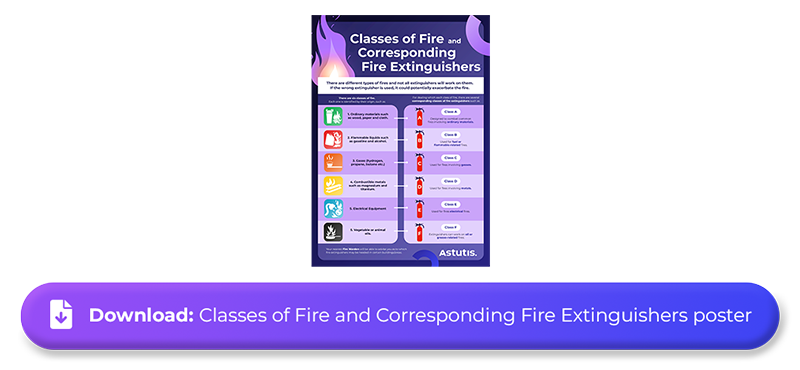
If any faults are discovered, they must be raised and addressed in good time. You'll also need to be sure that employees understand which fire extinguisher to use for different types of fire. Download our free infographic detailing the exact information you need to know to combat a fire effectively.
Review and Report on Your Evacuation Plan
This step is where a lot of businesses tend to trip up. Fire safety plans need to be regularly reviewed and tweaked to identify any caps or improvements that are needed. Fire safety legislation changes on occasion, and it is necessary to check regularly to ensure you remain compliant.
Fire Safety Training Courses for Employees
We have a range of courses that can train employees for a variety of different responsibilities including fire safety. Our team of experts have crafted our industry-renowned NEBOSH Certificate in Fire Safety.
By the end of the courses, learners will be able to:
- Justify fire safety improvements using moral and financial arguments.
- Advise how fires and explosions can occur and the appropriate controls to minimise fire and explosion risks.
- Advise your employer on the requirements for the fire protection premises and workers including the appropriate training obligations.
- Carry a fire risk assessment in your workplace – prioritising risks, inspecting the workplace, recognising a range of common fire hazards, evaluating risks (taking account of current controls), recommending further control measures, and planning actions.
Click the button below to read FAQs about the course, and the different study methods available. If you'd like to try the course, you can access our Free Fire Evacuation module to test your skills and get sneak peek at how our online course is delivered.


Real Life Stories