







Top 5 Business Benefits of the Astutis Workplace Safety Suite
The five biggest business benefits of the Workplace Safety Suite are consolidating multiple training providers into one subscription, delivering consistent accredited training across every site, scaling onboarding without scaling admin, proving compliance through centralised reporting, and reducing the cost and disruption of classroom delivery. Each of those solves a problem I have watched organisations wrestle with for years.
A quick word on how to read this. Product pages list benefits because listing benefits is their job. What I want to do here is explain why each one actually matters commercially, where it applies most, and where it does not, because a benefit that does not match your situation is not a benefit to you. I helped build this product, so treat this as the reasoning behind it rather than an independent review.
Why Do the Business Benefits Matter More Than the Feature List?
Safety training is unusual as a purchase. The people who feel the pain of doing it badly, the safety and HR teams, are rarely the people who sign off the budget. That disconnect is why so many organisations run fragmented, inconsistent training for years without anyone deciding to.
HSE figures for 2024/25 record 680,000 people sustaining an injury at work, 1.9 million suffering work-related ill health, and 40.1 million working days lost, at an estimated cost to Great Britain of £22.9 billion. The business benefits below are worth reading through that lens. They are not abstract conveniences. They are the difference between managing that exposure deliberately and hoping nobody asks to see your records.
Benefit 1 | Consolidating Multiple Providers Into One Subscription
This is the benefit finance directors understand fastest, because it shows up directly on invoices.
Most organisations of any size accumulate training suppliers over time. A provider for fire safety here, a manual handling course bought separately there, an asbestos awareness module from a third supplier. Each carries its own contract, its own renewal date, its own login, and its own administrative tail. Nobody chose that sprawl; it grew.
Replacing it with a single subscription reduces complexity, duplication and administration in one move. One relationship, one renewal, one place the records live. The saving is partly the licence fees, but the larger and less visible saving is the administrative time currently spent managing several suppliers who do not talk to each other.
Benefit 2 | Consistent, Accredited Training Across Every Site
Consistency is the benefit that matters most for risk, even if it rarely leads the sales conversation.
When each site sources its own training, you get variance. Different content, different standards, different assumptions about what good looks like. That variance is invisible until an incident or an inspection exposes it, at which point it becomes very visible indeed. Delivering the same accredited content everywhere removes it.
Accreditation matters here specifically. All courses in the Suite are accredited by IIRSM and RoSPA, which means every site is working from content designed against a recognised external standard rather than something assembled locally. When an inspector or insurer asks what your training consisted of, pointing at external accreditation is a materially stronger position than describing an internal slide deck.
Benefit 3 | Scaling Onboarding Without Scaling Admin
Growth is where fragmented training quietly breaks. Every new starter, every acquired team, every new site adds to the training burden, and if your system relies on manual coordination, that burden grows in step with your headcount.
A scalable digital solution breaks that link. New starters and growing teams can be brought to a common baseline quickly and consistently, through structured online learning rather than waiting for the next scheduled classroom date. The training capacity scales without the administrative effort scaling alongside it.
This benefit is worth most to organisations that are actually growing or acquiring. If your headcount is stable and your sites are settled, it matters less. Match the benefit to your trajectory, not to the brochure.
Benefit 4 | Proving Compliance Through Centralised Reporting
Your legal duty was never to hold certificates. It was to ensure competence, and to be able to demonstrate it. Those are different things, and the second one is where most organisations are weakest.
Centralised tracking, completion rates and training records through one set of reporting tools changes the position from reactive to ready. Instead of assembling evidence in a panic when an audit is announced, you can see current compliance status at any moment. Real-time tracking and analytics mean the question 'are we compliant right now?' has an answer that takes seconds rather than a fortnight of chasing.
The Management of Health and Safety at Work Regulations 1999 place duties on employers around competence and capability. Being able to evidence that you have met them, on demand and by site, is not administrative tidiness. It is the difference between a defensible position and an exposed one.
If you want the full argument for how this stacks up financially, including how to build a business case your finance director will accept, I have set out the cost, benefits and ROI case for the Workplace Safety Suite separately.
Benefit 5 | Reducing the Cost and Disruption of Classroom Delivery
Classroom training carries costs that never appear on the course invoice. Travel, accommodation, venue hire, and the productive hours lost while people sit in a room away from their jobs. For a dispersed workforce, those hidden costs frequently exceed the price of the training itself.
Delivering core awareness training online removes most of that. People learn at their own pace, anytime and anywhere, through structured modules, videos and scenario-based activities rather than a day out of the business. For recurring, workforce-wide awareness topics, that is usually where the cost comparison is won.
I would add one honest caveat. Online delivery suits awareness and knowledge-based competence well. Where a competence genuinely requires physical demonstration and supervised assessment, online learning supports it but does not wholly replace it. The Suite is built for the former, and it does that job efficiently.
Which Benefit Matters Most for You?
The instinct is to want all five. In practice, one or two will dominate depending on how you are set up today.
- Running several providers? Benefit 1 alone often carries the decision.
- Operating across multiple sites? Benefit 2 is your biggest risk reducer.
- Growing or acquiring quickly? Benefit 3 compounds fastest.
- Facing audits or tighter scrutiny? Benefit 4 changes your posture immediately.
- Training a dispersed workforce in person? Benefit 5 releases the most trapped cost.
Work out which of those describes you before you weigh the product. The Suite is strongest for organisations where several of them apply at once, typically medium and large employers with multi-site or hybrid workforces. If only one applies, it may still be worth it, but go in knowing which problem you are actually solving.
And if the practical question is which courses sit inside the library and which your teams actually need, I have covered which courses are included in the Workplace Safety Suite in a companion piece.
Frequently Asked Questions
What Are the Main Business Benefits of the Workplace Safety Suite?
The five that matter most are consolidating multiple training providers into one subscription, delivering consistent accredited training across every site, scaling onboarding without scaling administration, proving compliance through centralised reporting, and reducing the cost and disruption of classroom delivery. Which one matters most depends on how your organisation is currently set up.
How Does the Suite Reduce Training Costs?
In two ways. It consolidates several training providers into a single subscription, reducing licence fees and administrative overhead, and it moves recurring awareness training online, removing the travel, accommodation, venue and lost-time costs attached to classroom delivery. For dispersed workforces, the second saving is often the larger of the two.
Is the Workplace Safety Suite Suitable for Small Businesses?
It is designed for medium and large organisations, particularly those with multi-site or hybrid workforces where consistency and oversight are hardest to maintain. Very small organisations training a handful of people occasionally are often better served buying individual courses, as the subscription benefits scale with volume and repetition.
How Does the Suite Help with Compliance?
It delivers accredited training consistently across the workforce and centralises completion records, tracking and reporting in one place. This means an organisation can demonstrate current compliance status on demand and by site, which supports the competence and capability duties employers hold under the Management of Health and Safety at Work Regulations 1999.
Can the Benefits Be Tailored to Our Organisation?
Yes. The Suite can be tailored through curated course selections, bespoke learning pathways and flexible deployment through the Astutis platform or your own learning management system, so the benefits align with your workforce structure and priorities rather than a fixed package.
The benefits land differently for every organisation, depending on how you are set up today. A short demo is the quickest way to see which of these five would move the needle most for you. The benefits land differently for every organisation, depending on how you are set up today. A short demo is the quickest way to see which of these five would move the needle most for you.

Health and Safety Insights
-
More Than 6 Million Vapes Binned Each Week as Battery Fires Hit Waste Sites
Find out why binned vapes are causing battery fires in bin lorries and waste sites, and what health and safety teams can do to cut the risk.12.10.26 -
Most E-Bike and E-Scooter Fires Reported in 2025 Started Indoors or at Home
OPSS received reports of 267 e-bike and e-scooter fires in 2025, and 55% started indoors. Brenig Moore explains what it means for your fire risk assessment.06.10.26 -
Nearly Half of UK Employers Step Up In-House Talent Development, CIPD Report Finds
Nearly half of UK employers are growing talent in-house, says the CIPD. Brenig Moore explains what it means for safety training and competence.29.09.26 -
TfL to Retrofit Bus Cabs With Air Conditioning by 2027 Following Driver Heat Complaints
Discover what TfL’s pledge to air condition bus cabs by 2027 means for heat risk, duty of care and the UK’s missing legal temperature limit.22.09.26 -
New Law Makes Employers Liable for Third-Party Harassment from October 2026
From 30 October 2026, employers can be liable for harassment of staff by customers and clients. Brenig Moore explains the change and the reasonable steps to take now.15.09.26 -
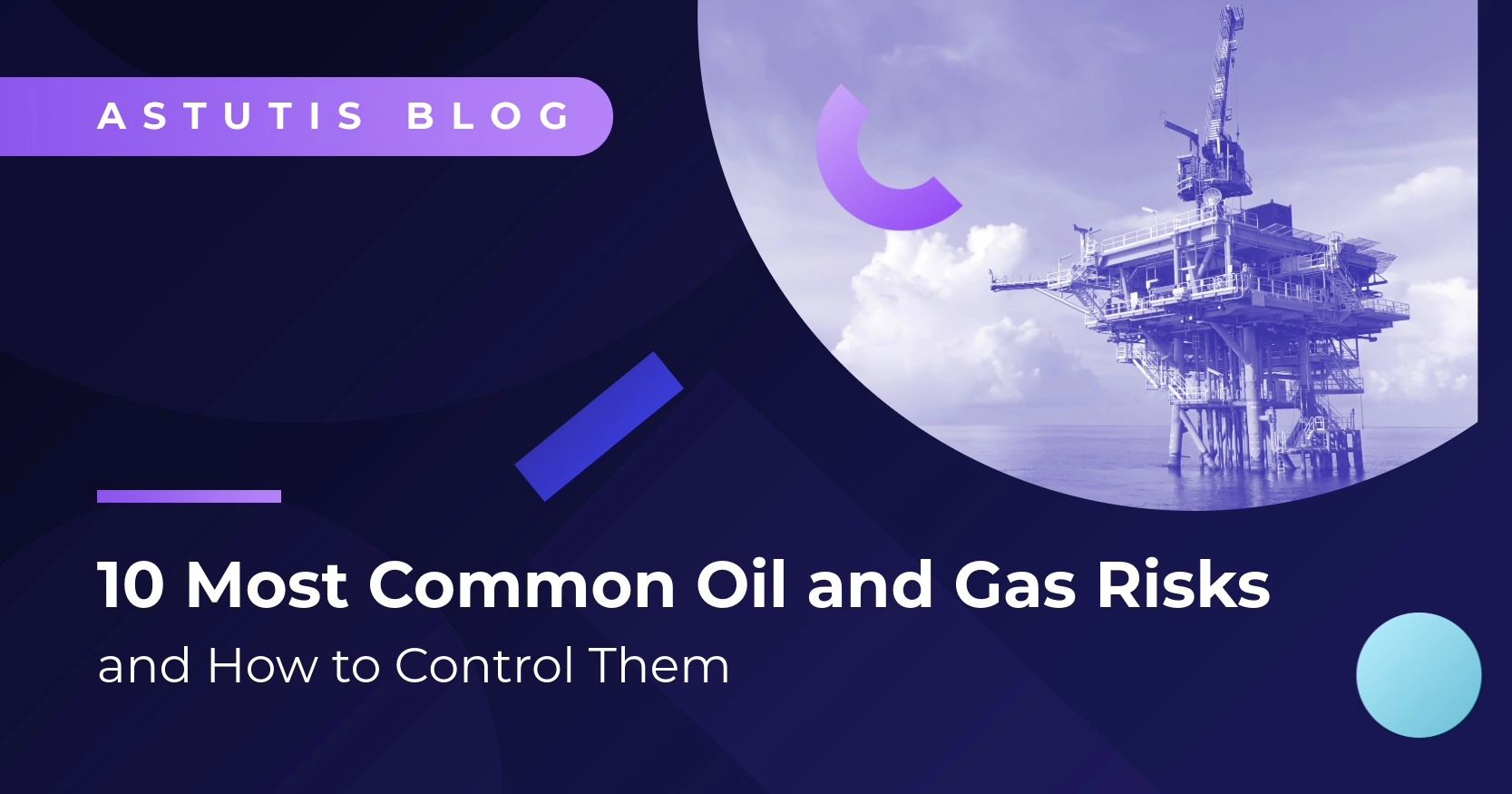
10 Most Common Oil and Gas Risks and How to Control Them
Discover the 10 most critical oil and gas industry risks and proven control strategies from HSE expert Brenig Moore. Essential guide for safety pros.15.09.26

Real Life Stories

