
Climate Change Obligations for UK Businesses | A Practical Guide
December is a busy month for anyone who looks after energy and carbon compliance. Organisations that took part in Phase 3 of the Energy Savings Opportunity Scheme (ESOS) must submit their annual action plan progress update by 5 December 2026. Less than four weeks later, on 31 December, the ESOS Phase 4 qualification date fixes who's in scope for the next compliance period.
Those dates sit inside a much wider set of climate change obligations. Some are laws with penalties attached. Others are standards moving from voluntary to mandatory. A growing number are expectations set by customers and public sector buyers. This guide maps what applies to whom, and where organisations most often get caught out.
Why Climate Change Became a Compliance Issue
Greenhouse gases such as carbon dioxide and methane trap heat in the atmosphere. That natural greenhouse effect keeps the planet habitable. However, burning fossil fuels has pushed atmospheric CO2 above 420 parts per million, roughly 50% higher than pre-industrial levels. The World Meteorological Organization confirmed that 2024 was the first calendar year in which global average temperatures went more than 1.5°C above pre-industrial levels.
Policy has followed the science, though slowly. The Kyoto Protocol set binding targets for a 'basket of six' greenhouse gases: carbon dioxide, methane, nitrous oxide, hydrofluorocarbons, perfluorocarbons and sulphur hexafluoride. The 2015 Paris Agreement committed nearly every country to keeping warming well below 2°C and pursuing 1.5°C. That commitment is where today's net zero targets come from.
The UK's legal response is the Climate Change Act 2008. It originally required an 80% cut in emissions by 2050 against 1990 levels, and a 2019 amendment raised that target to net zero. The Act also sets legally binding five-year carbon budgets. Most of the business obligations below exist to keep the UK within them.
The Language Behind Every Regime
Almost every UK reporting regime borrows its method from the Greenhouse Gas (GHG) Protocol, which splits emissions into three scopes:
- Scope 1 covers direct emissions from sources you own or control, such as gas boilers and company vehicles.
- Scope 2 covers indirect emissions from the electricity, heat and steam you buy.
- Scope 3 covers everything else in your value chain, from purchased goods to business travel.
Gases are compared using Global Warming Potential (GWP), which measures each gas's heating effect against CO2 over 100 years. Using the IPCC's Fifth Assessment Report values, methane scores 28 and sulphur hexafluoride scores 23,500. A small leak of the wrong gas can outweigh a year of careful energy saving.
Which Obligations Apply to Your Organisation?
Streamlined Energy and Carbon Reporting (SECR)
SECR has applied through the Companies Act 2006 reporting framework since April 2019. Quoted companies must report global scope 1 and 2 emissions, energy use, an intensity ratio and energy efficiency actions in their annual report. Large unquoted companies and limited liability partnerships (LLPs) report UK energy and emissions if they meet two or more of these tests: 250 employees, turnover above £54 million or a balance sheet above £27 million. Those financial thresholds rose for financial years starting on or after 6 April 2025, so some mid-sized firms have recently dropped out of scope.
Energy Savings Opportunity Scheme (ESOS)
ESOS applies to UK undertakings with 250 or more employees, or with turnover above £44 million and a balance sheet above £38 million. Qualifying organisations must audit at least 95% of their energy use across buildings, transport and industrial processes every four years. Phase 4 removes Display Energy Certificates as a compliance route. It also requires you to report progress against your previous action plan and explain any missed commitments. The compliance deadline is 5 December 2027.
Climate-Related Financial Disclosures
Since April 2022, UK companies with more than 500 employees and turnover above £500 million have had to make disclosures aligned with the Task Force on Climate-related Financial Disclosures (TCFD). The government has now published UK Sustainability Reporting Standards (UK SRS S1 and S2), based on the international ISSB baseline. They're voluntary for now, but the Financial Conduct Authority (FCA) has consulted on writing them into the listing rules.
Climate Change Levy and the UK ETS
The Finance Act 2000 created the Climate Change Levy (CCL), a tax on business energy use. Energy-intensive sectors can claim large discounts through Climate Change Agreements in return for meeting efficiency targets. Heavy emitters fall under the UK Emissions Trading Scheme (UK ETS), a cap-and-trade system that replaced the EU scheme in 2021. Its scope is now widening to cover domestic maritime and waste incineration.
Expectations That Behave Like Law
Even if no statute names you, your customers might. Suppliers bidding for central government contracts worth more than £5 million a year must publish a Carbon Reduction Plan under Procurement Policy Note 006. Large private buyers increasingly ask for the same, because your scope 1 and 2 emissions form part of their scope 3.
Where Organisations Get Caught Out
Sizing up the wrong entity. ESOS looks at the whole UK corporate group. If one subsidiary counts as large, the entire UK group qualifies. UK establishments of overseas companies can be caught regardless of their own size.
Running SECR and ESOS as separate projects. Finance often owns SECR while facilities owns ESOS. Each team pulls its own meter data with different boundaries, and sometimes with different years' conversion factors. The Environment Agency publishes most ESOS notification data, so anyone can spot a gap between your ESOS figures and your annual report.
Treating the action plan as paperwork. Phase 3 introduced action plans and Phase 4 makes you account for them. If commitments were written to sound ambitious rather than to be delivered, December 2027 will be uncomfortable.
Ignoring scope 3 because it's voluntary. CDP's 2021 supply chain report found that supply chain emissions average 11.4 times operational emissions. Scope 3 is where most of the climate impact sits, and it's also where most of the commercial pressure comes from.
Letting claims outrun evidence. Since April 2025, the Competition and Markets Authority can fine businesses up to 10% of global turnover for misleading consumers, including through unsupported green claims.
One Dataset, Many Obligations
The most useful step for most organisations is to build a single energy and carbon dataset with one named owner. Set your organisational boundary once, map every meter and fuel source to it and record which conversion factors you used. SECR, ESOS, Carbon Reduction Plans and customer questionnaires then all draw on the same numbers instead of four separate scrambles.
This is also where compliance starts paying for itself. Government guidance states that the savings from ESOS recommendations significantly outweigh the cost of the assessment. Using less energy cuts both your bills and your CCL charges, and burning less fuel improves local air quality too.
Register for Our Climate Change Webinar on 1 December
Want to know exactly which regimes apply to your organisation? Join Kathryn Jenkins, Astutis Sustainability and Environmental Trainer, live on Tuesday 1 December 2026 at 11:00am.
Kathryn will start with the science of the greenhouse effect and move through international policy into the detail of UK legislation. That includes the Climate Change Act, SECR, ESOS, the UK ETS and climate-related financial disclosures. You'll leave knowing which reporting regimes apply to different types of business and how cutting emissions supports compliance and cost savings. Expect live polls and time for your questions.
Environmental Insights
-
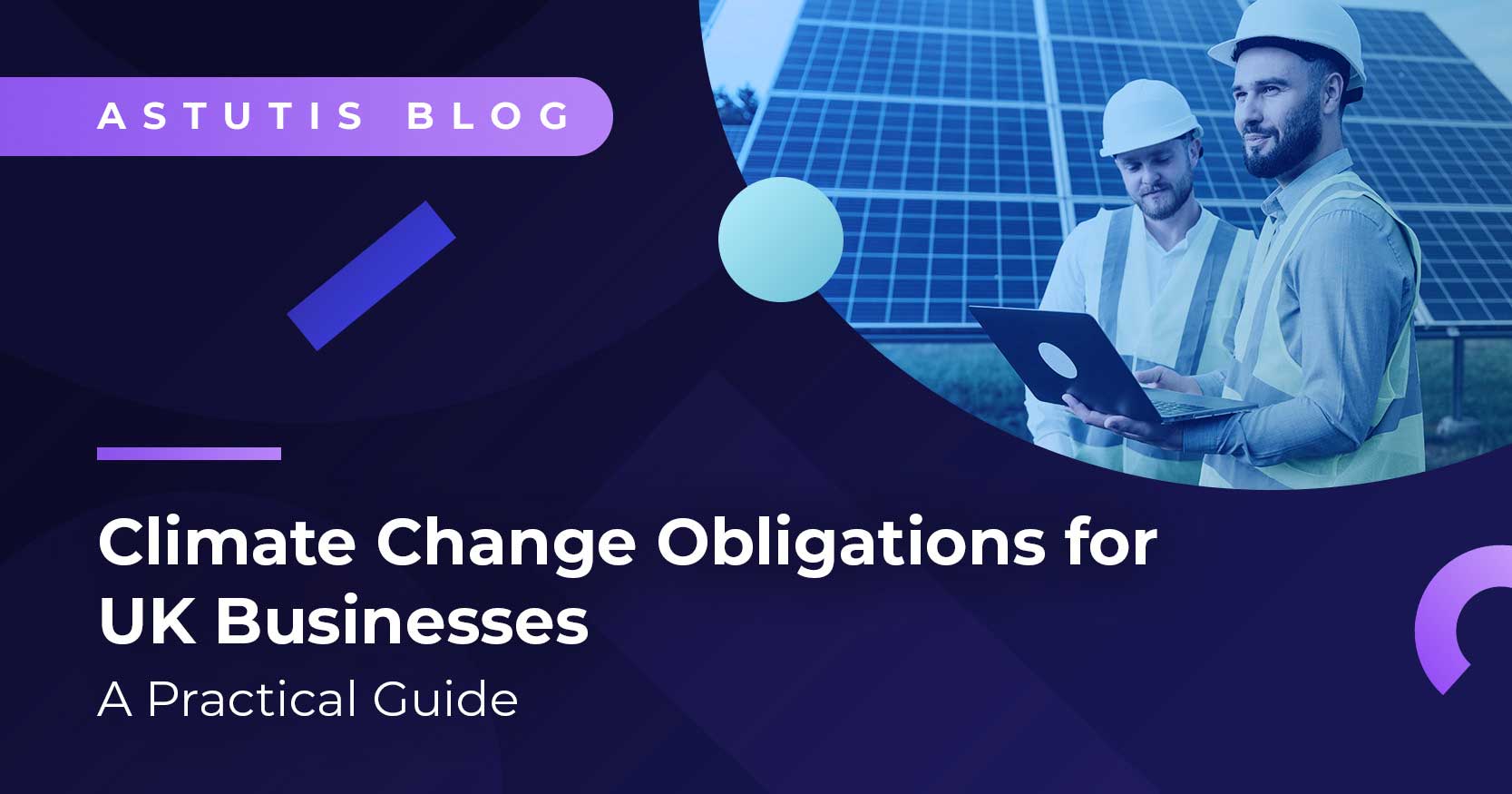
Climate Change Obligations for UK Businesses | A Practical Guide
Which UK climate laws apply to your business? A plain-English guide to SECR, ESOS, climate disclosures and the UK ETS, plus the pitfalls that catch firms out.23.11.26 -
How to Conduct a DSE Workstation Assessment
Learn about DSE and workstations as well as how to conduct a full DSE workstation assessment to prevent musculoskeletal disorders.12.11.26 -
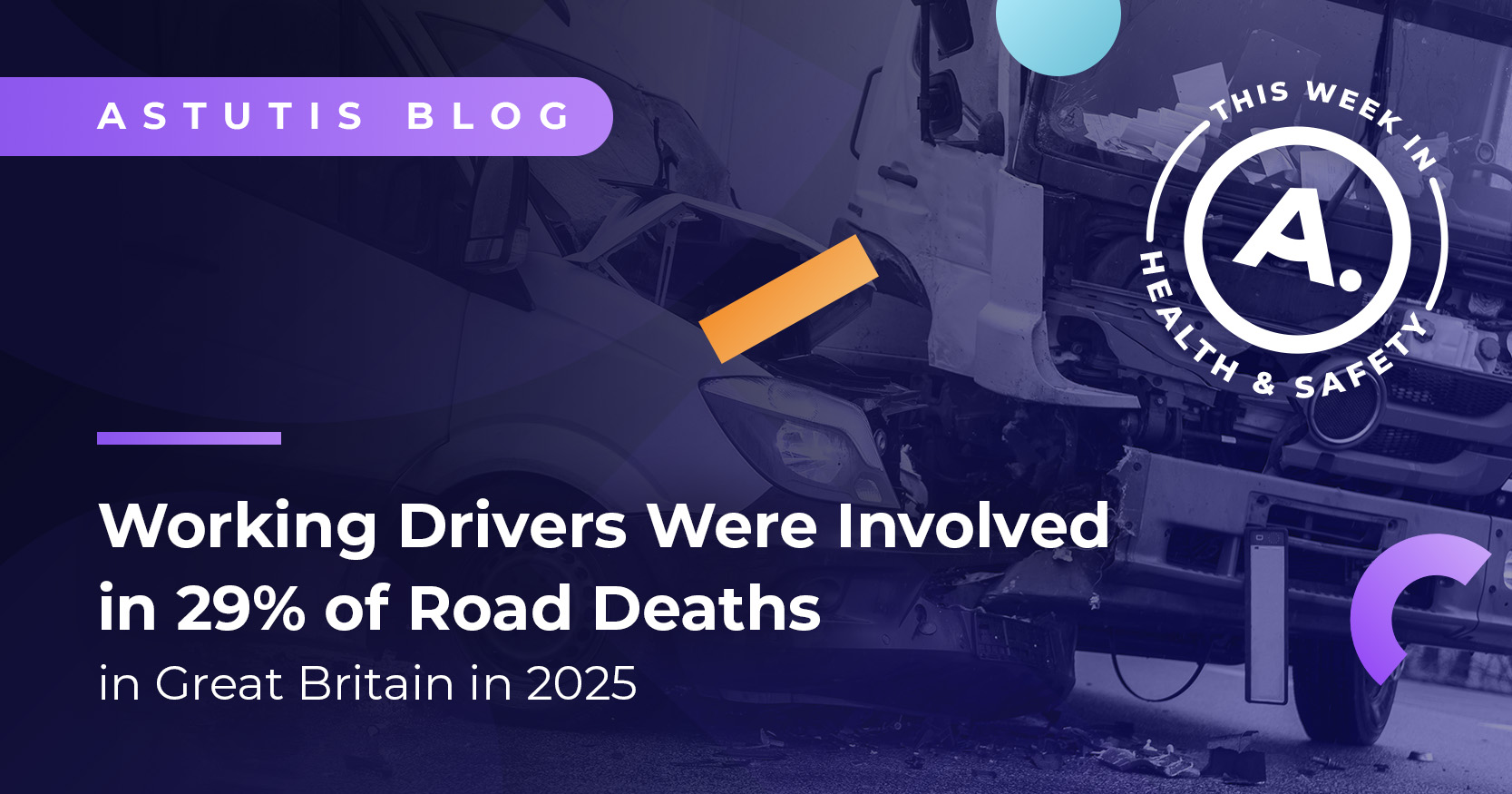
Working Drivers Were Involved in 29% of Road Deaths in Great Britain in 2025
DfT estimates show 445 people died in 2025 in collisions involving a working driver. Here is what health and safety professionals should do next.12.11.26 -
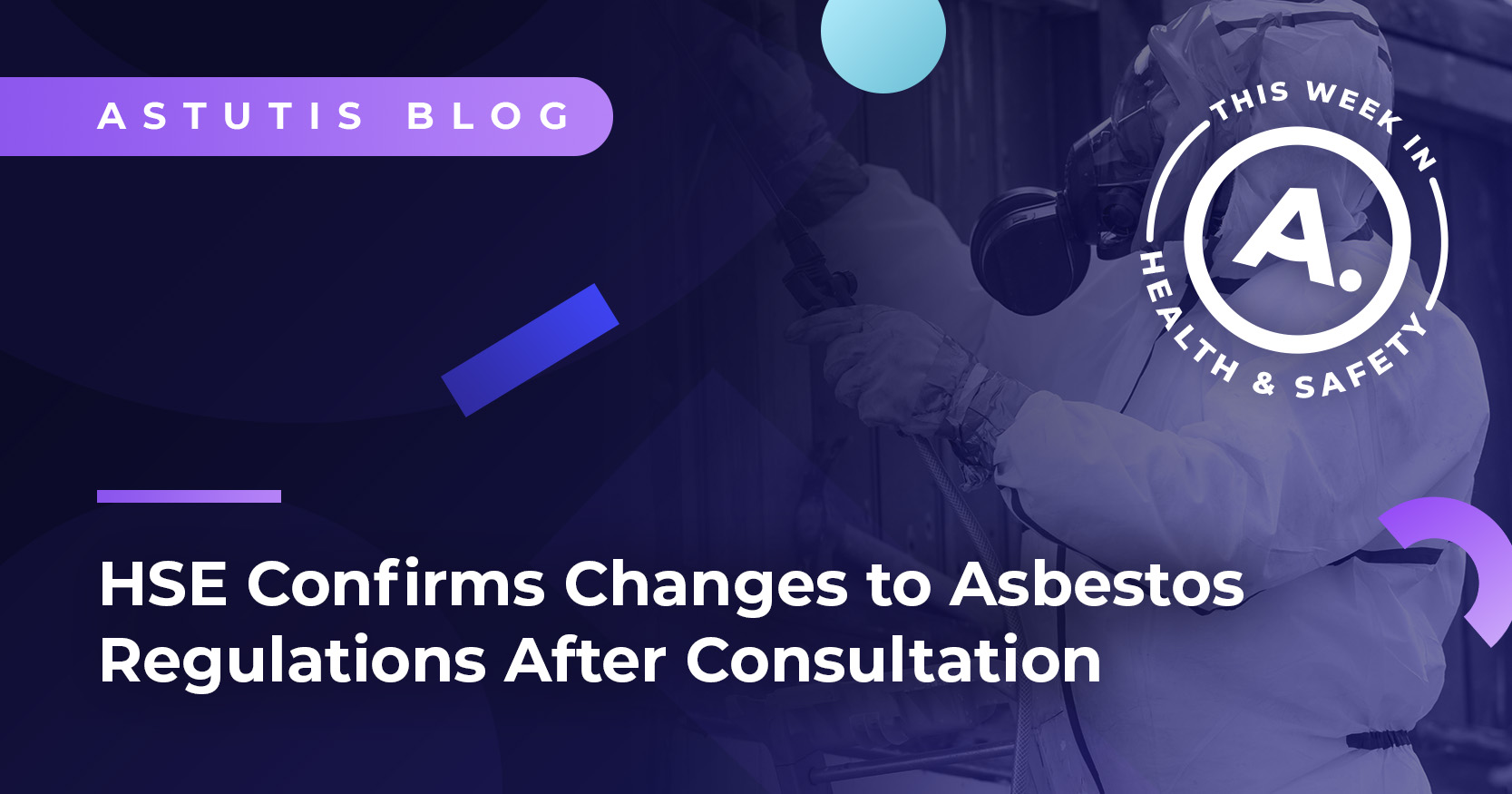
HSE Confirms Changes to Asbestos Regulations After Consultation
HSE will stop asbestos removal contractors appointing their own clearance analyst. Brenig Moore explains the CAR 2012 changes and what to do next.10.11.26 -

Who is Responsible for Fire Safety in the Workplace?
Find out the responsibilities of everyone in a workplace premises for fire safety, and understand key aspects such as fire evacuation, potential hazards and fire risk assessments.05.11.26 -

Common Workplace Manual Handling Injuries and How to Prevent Them
Protect employees from the most common manual handling injuries in the workplace and learn the importance of manual handling courses for injury prevention.05.11.26

Real Life Stories