






Risk Assessments in Manufacturing | Legal Requirements and Training Essentials
There's a dangerous phrase I hear too often on factory floors: "We assessed that risk last year." It should be no surprise to you when I say that yesterday's risk assessment won't protect today's workforce. Throughout my entire health and safety career, I've witnessed the evolution of risk management in manufacturing firsthand. With 11 workplace fatalities in UK manufacturing during 2024-25, the critical importance of robust risk assessments cannot be overstated.
Why Risk Assessments Are Legally Required
Despite common belief, legal compliance is not here to serve as a barrier to progress. It’s here to protect your workforce and sustain business operations.
Manufacturing employers face both moral and legal obligations to protect their workers. The reality is that 12% of manufacturers believe their ability to manage and mitigate risks is completely within their control, suggesting external factors increasingly challenge traditional safety approaches. This makes systematic risk assessment not just a legal requirement but a business imperative.
Beyond compliance, risk assessments drive operational excellence. They identify inefficiencies, reduce downtime from accidents, and protect your reputation. Business interruption continues to be the top concern for the Manufacturing industry, with 41% of Manufacturing respondents ranking it as their primary worry, often resulting from inadequately assessed risks materialising into incidents.
Common Hazards in Manufacturing Environments
Manufacturing presents unique challenges that demand vigilant risk assessment across multiple hazard categories.
Machinery and Equipment Risks
Moving machinery remains a persistent threat. Contact with moving machinery and falls from height are common causes of manufacturing fatalities Project HSS. I've investigated incidents where simple lockout/tagout procedures could have prevented tragedy—yet these controls were either absent or poorly implemented.
Emerging Digital Threats
53% of manufacturers named cyber security among their greatest risks to business success, while 60% said it was their biggest supply chain risk WTW. Modern risk assessments must now encompass digital vulnerabilities alongside traditional physical hazards, particularly as smart manufacturing systems become increasingly interconnected.
Environmental and Natural Hazards
Natural catastrophes remained the second highest risk for Manufacturing at 35% of industry respondents ManufacturingTomorrow, while fire remains the fourth most important risk at 25%. The growing prevalence of lithium-ion batteries in manufacturing processes has elevated fire risks, requiring updated assessment methodologies.
Legal Framework | MHSWR 1999 and HSWA 1974
Understanding your legal obligations forms the foundation of effective risk management in manufacturing.
The Health and Safety at Work Act 1974 establishes the overarching duty of care, requiring employers to ensure "so far as is reasonably practicable" the health, safety and welfare of employees. This general duty becomes specific through the Management of Health and Safety at Work Regulations 1999, which mandates:
- Suitable and sufficient risk assessments covering all work activities
- Regular reviews when circumstances change or incidents occur
- Competent persons to assist with assessments
- Written records for employers with five or more employees
- Implementation of control measures following the hierarchy of controls
Non-compliance carries severe consequences. Beyond potential prosecution and unlimited fines, in the event of a fatality or serious injury, organisations face investigation with reputational damage often exceeding financial penalties.
How IOSH Managing Safely Prepares Managers to Lead Assessments
The IOSH Managing Safely qualification equips managers with practical skills to conduct meaningful risk assessments that go beyond paper exercises.
Practical Assessment Skills
The course requires learners to complete a practical risk assessment project identifying four workplace hazards, using the IOSH 5×5 matrix to assess both likelihood and severity of risks Astutis. This hands-on approach ensures managers can immediately apply learning to their workplace.
Building a Risk-Aware Culture
Through my experience delivering this training, I've seen managers transform from viewing risk assessment as bureaucracy to understanding it as a vital management tool. The course provides knowledge and tools required to work safely, with modules backed by clear examples and recognisable scenarios Institution of Occupational Safety and Health, making the content immediately relevant to manufacturing contexts.
The qualification develops competencies in:
- Hazard identification techniques specific to manufacturing
- Risk rating using standardised matrices
- Control measure selection following the hierarchy
- Monitoring and review processes
- Incident investigation methodologies
Downloadable Risk Assessment Template
To support your risk management journey, I've developed a manufacturing-specific template incorporating best practices.
Template Structure: The template uses a straightforward six-column format designed for clarity and practical application.
- Hazard Identification - Clear identification of what could cause harm.
- Who Might Be Harmed and How - Specific groups at risk and potential injury mechanisms.
- Control Measures - Existing safeguards and preventive measures in place.
- Further Action Needed - Additional controls required to reduce residual risk.
- Responsible Party - Named job roles (not individuals) accountable for implementation.
- Action Deadline - Specific dates for completion of additional controls.
- Review Note - Making a note to go back and check the risk assessment when necessary.
Remember to assign specific job titles to each control measure and set measurable timeframes rather than vague terms like "ongoing".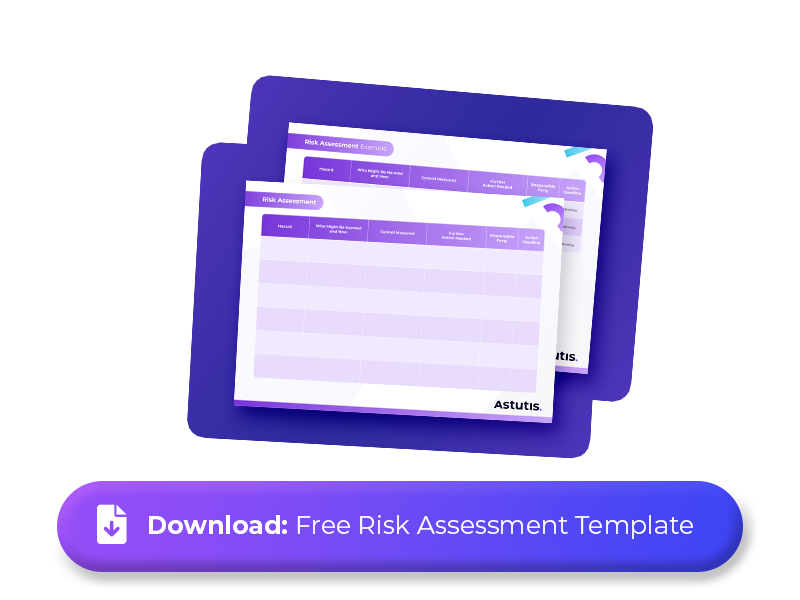
Effective risk assessments are living documents that drive continuous improvement, not static compliance paperwork.
The manufacturing landscape continues to evolve. This transformation requires equally evolved approaches to risk assessment. By investing in proper training and maintaining robust assessment processes, we protect our people whilst positioning our organisations for sustainable success.
Ready to elevate your organisation's risk management capabilities? Explore our IOSH Managing Safely course or discover more insights in our blog to build a stronger safety culture in your manufacturing operations.

Manufacturing Safety Requirements
-
European Parliament Backs Tougher Limits on Cancer-Causing Chemicals at Work
Discover what the EU's sixth CMRD revision means for exposure limits, firefighters, PPE and training, and why UK safety pros should act now.19.10.26 -
More Than 6 Million Vapes Binned Each Week as Battery Fires Hit Waste Sites
Find out why binned vapes are causing battery fires in bin lorries and waste sites, and what health and safety teams can do to cut the risk.12.10.26 -
Most E-Bike and E-Scooter Fires Reported in 2025 Started Indoors or at Home
OPSS received reports of 267 e-bike and e-scooter fires in 2025, and 55% started indoors. Brenig Moore explains what it means for your fire risk assessment.06.10.26 -
Nearly Half of UK Employers Step Up In-House Talent Development, CIPD Report Finds
Nearly half of UK employers are growing talent in-house, says the CIPD. Brenig Moore explains what it means for safety training and competence.29.09.26 -

TfL to Retrofit Bus Cabs With Air Conditioning by 2027 Following Driver Heat Complaints
Discover what TfL’s pledge to air condition bus cabs by 2027 means for heat risk, duty of care and the UK’s missing legal temperature limit.22.09.26 -
New Law Makes Employers Liable for Third-Party Harassment from October 2026
From 30 October 2026, employers can be liable for harassment of staff by customers and clients. Brenig Moore explains the change and the reasonable steps to take now.15.09.26

Real Life Stories

